SmartSpace: An innovative furniture solution optimizing limited living space
Overview
SmartSpace reimagines how people inhabit small homes in high-density cities. As urban housing prices rise at twice the rate of income growth, living spaces continue to shrink, especially for young professionals and families limited to apartments under 25 pings. In this context, SmartSpace is not merely a set of modular furniture but an architectural system designed to expand what limited space can mean.
Developed through the Young Entrepreneurs of the Future program, SmartSpace integrates mechanical engineering, spatial design, and IoT technology into a seamless environment where beds lift, cabinets descend, and rooms transform at a touch or a voice command. Its design language emphasizes balance, combining lightweight mechanical precision with the warmth of natural materials.
Rather than selling furniture, SmartSpace offers an adaptive ecosystem that turns compact living into an experience of freedom and control. Each element, including the bed, sofa, desk, and storage, responds dynamically to human needs, making physical space as fluid and intelligent as the digital systems that guide it.
Design
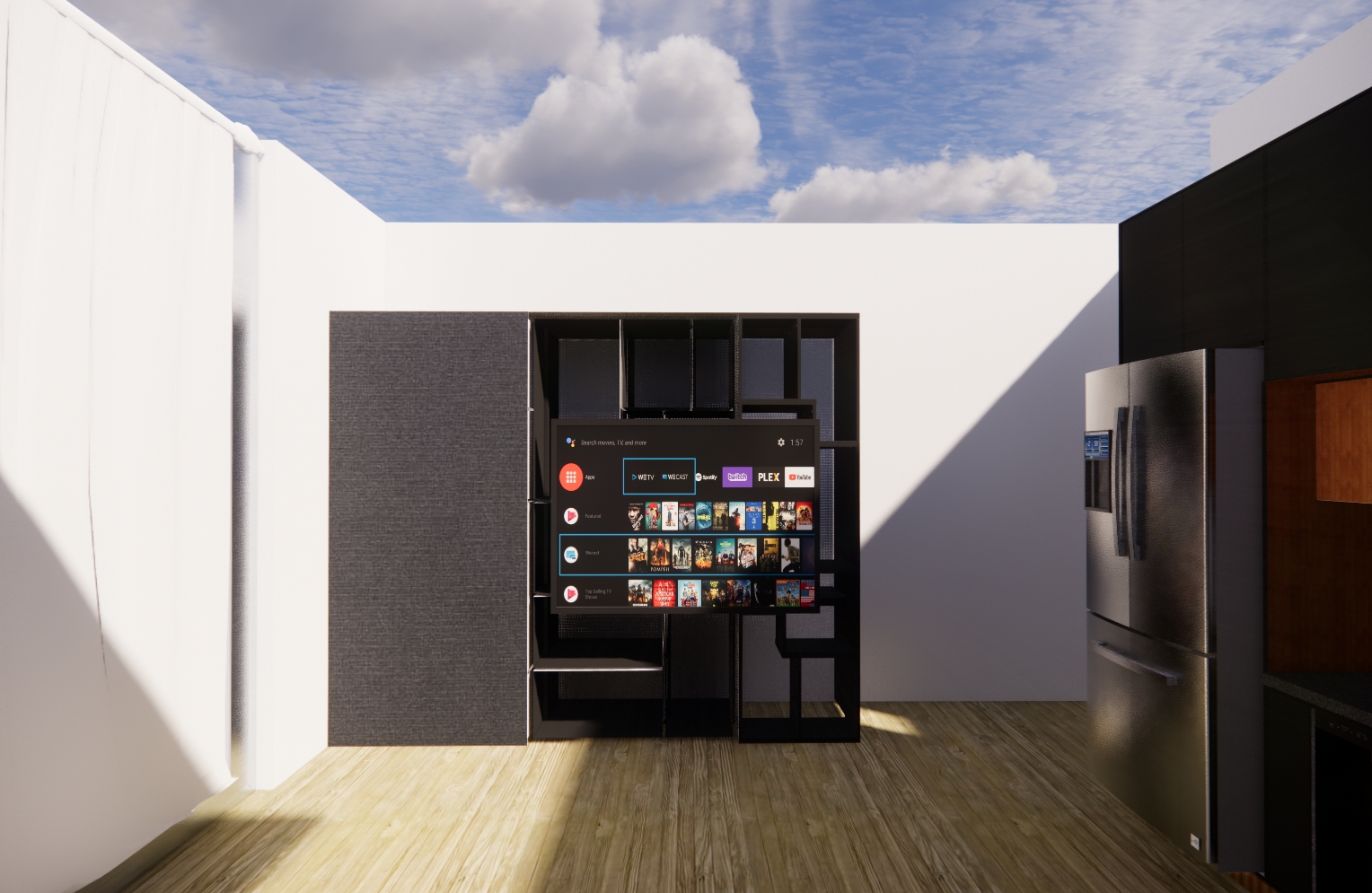
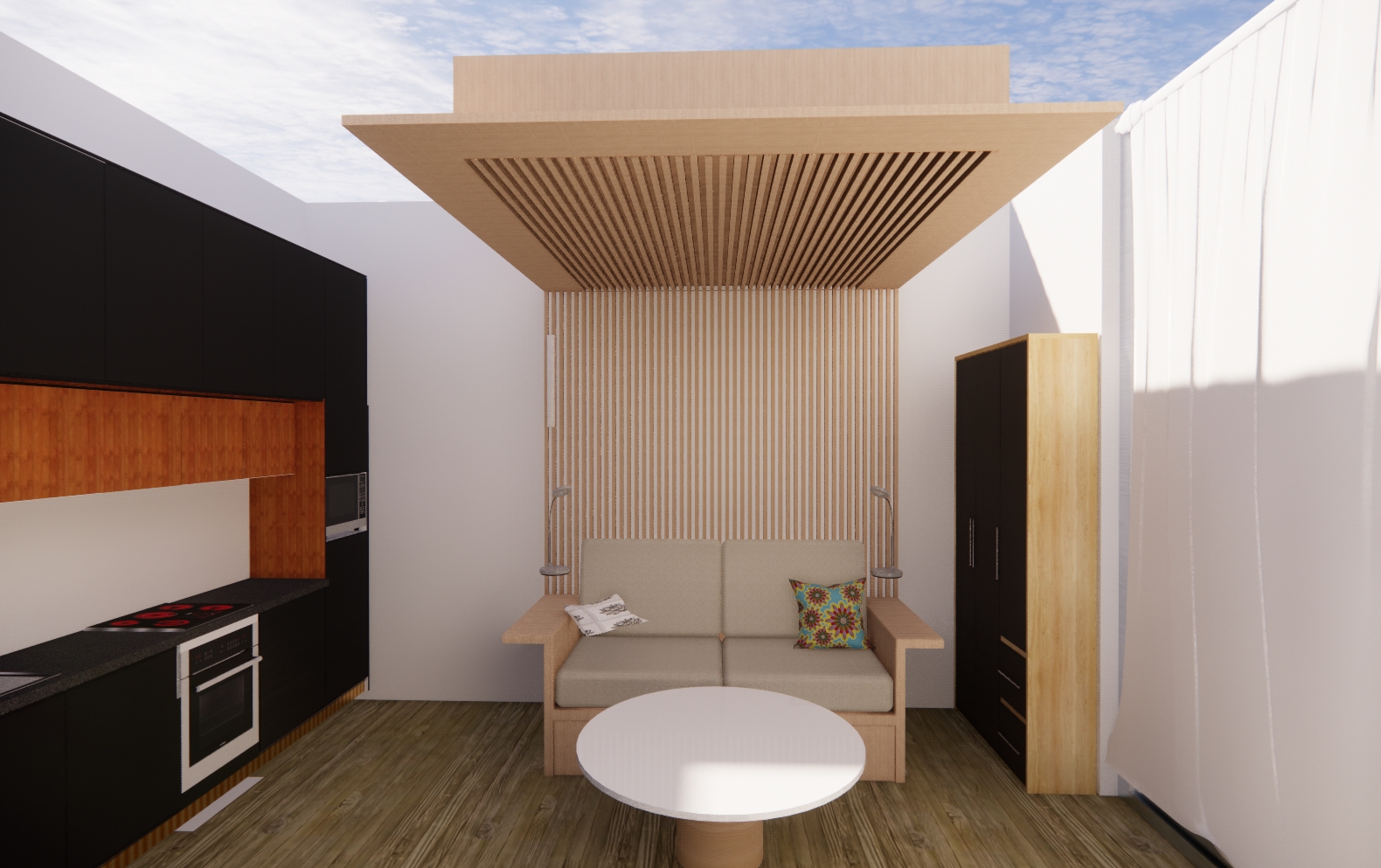
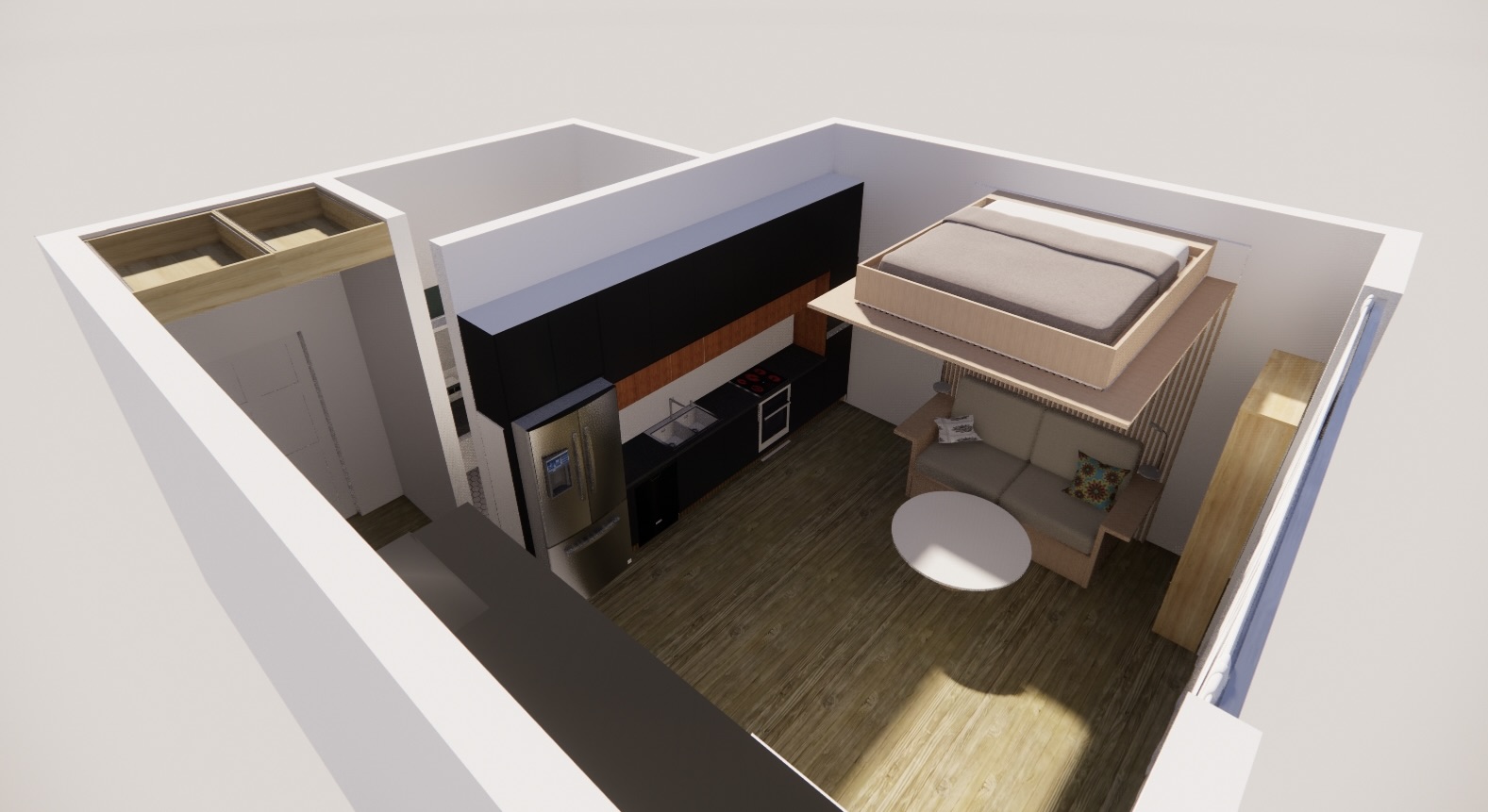
SmartSpace transforms static interiors into responsive living systems. Each furniture module, including the bed, cabinet, and workspace, is designed to reconfigure spatial boundaries with a single gesture. Through embedded sensors, IoT integration, and precision-engineered mechanics, the system enables effortless transitions between sleep, work, and leisure within the same physical footprint.
The lifting bed expands vertical volume, creating a flexible environment that can shift from bedroom to living area in seconds. The adaptive cabinet system responds to weight sensors and motion detection, ensuring both safety and smooth automation. The mobile study desk operates along a concealed track system, allowing users to reorganize furniture placement without manual labor.
All modules are controllable by voice or app, turning space into an intelligent interface. Beyond mechanical motion, SmartSpace learns user habits and optimizes movement patterns over time, enhancing comfort, safety, and energy efficiency. By combining industrial design with digital intelligence, SmartSpace makes limited square footage feel open, dynamic, and human-centered.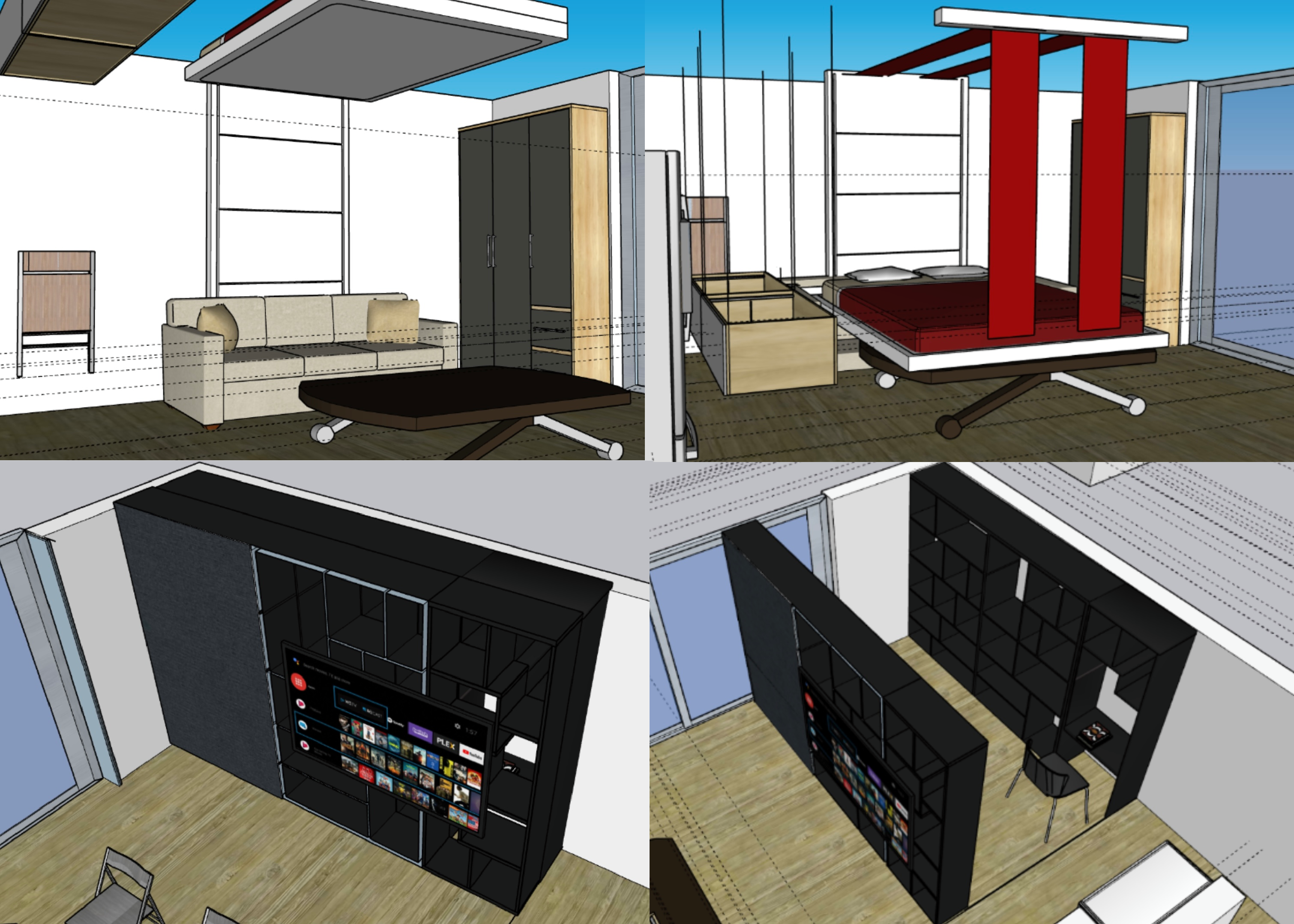
Challenges
At the outset, defining a viable business model proved to be the most uncertain part of the journey. While the product concept of intelligent modular furniture for small homes was clear, its path to market was not. The team faced the challenge of aligning technological innovation with a sustainable revenue structure that could realistically support large-scale production and adoption.
To bridge this gap, representatives traveled to Silicon Valley to study how international startups were integrating design and business. A visit to a leading company in adaptive furniture revealed how spatial intelligence could scale through strategic partnerships rather than direct-to-consumer sales. Hearing from its founder, who had previously worked at Apple and Tesla, reframed the team’s understanding of value creation: innovation needed distribution as much as engineering.
Inspired by that insight, SmartSpace reoriented its model toward B2B collaboration, positioning itself as a system provider for real estate developers rather than individual buyers. This shift transformed uncertainty into opportunity and led to the signing of partnership agreements with two major construction firms, anchoring the project in both design excellence and market reality.
Impact
Through SmartSpace, the project evolved from a conceptual design into a validated business solution addressing one of Taiwan’s most urgent urban challenges. I led the market research process by analyzing demographic data, property trends, and pricing disparities, uncovering how the average housing size had decreased by over five percent while small units under twenty-five pings had exceeded forty percent of total sales. This analysis grounded our understanding of the pain point and clarified that the true opportunity lay not in individual sales but in partnerships with developers building compact apartments.
Drawing on these insights, I collaborated with the team to formulate a B2B strategy that integrated modular design with large-scale construction workflows. We quantified the market potential through total addressable market (TAM), serviceable available market (SAM), and serviceable obtainable market (SOM) analyses, identifying an eighty-billion-dollar domestic opportunity. The clarity of this model strengthened our negotiations and directly enabled the signing of letters of intent with two tier-one construction companies.
The outcome extended beyond competition recognition. Our research and partnerships demonstrated how design innovation can merge with economic reasoning to create real spatial value. SmartSpace became more than a prototype; it became a framework for how adaptive design could redefine urban living in the era of constrained space.
Media